Saturday, January 8, 2011

Midnight Sun

File:Midnight sun in Kiruna.jpg


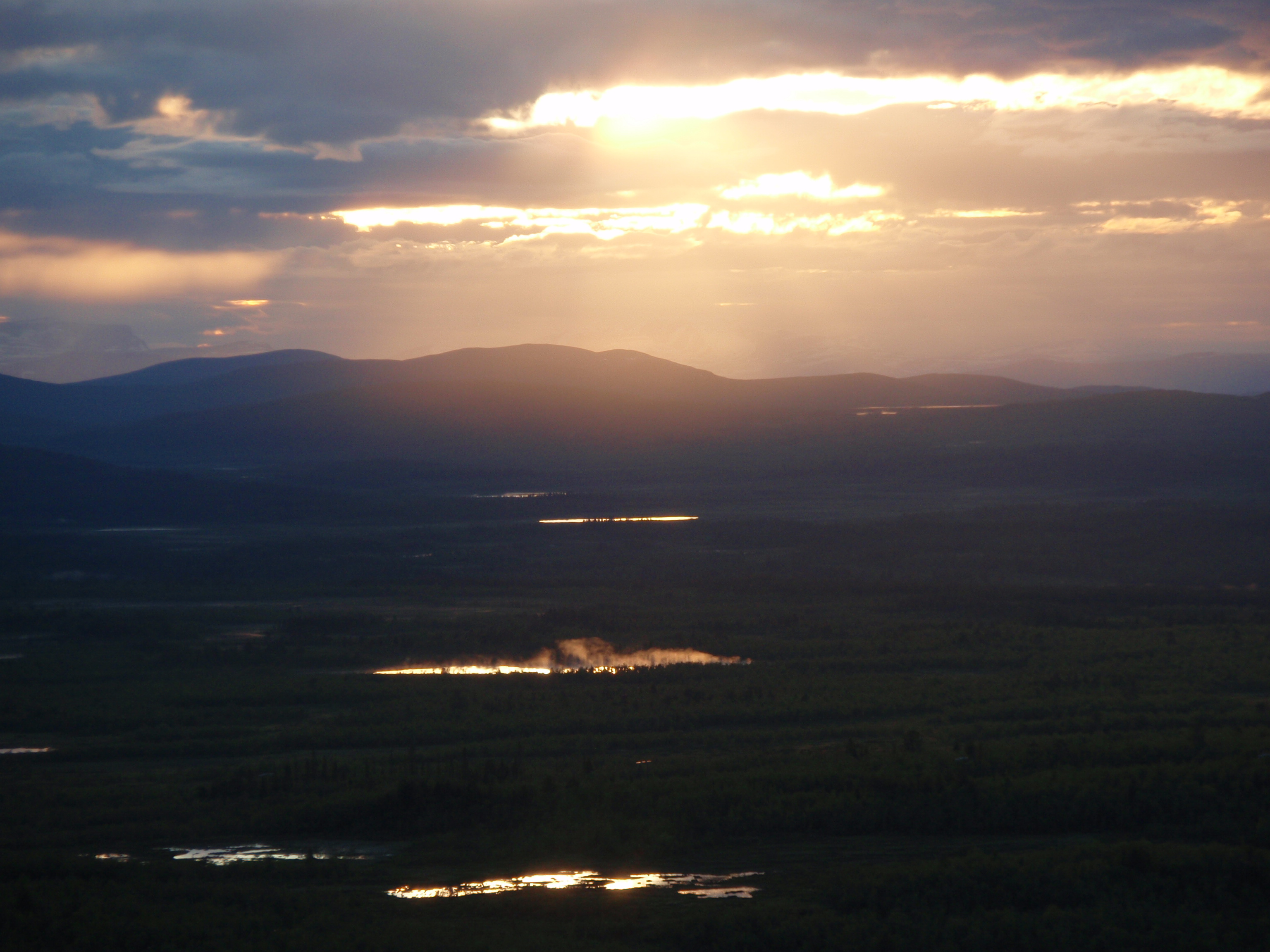
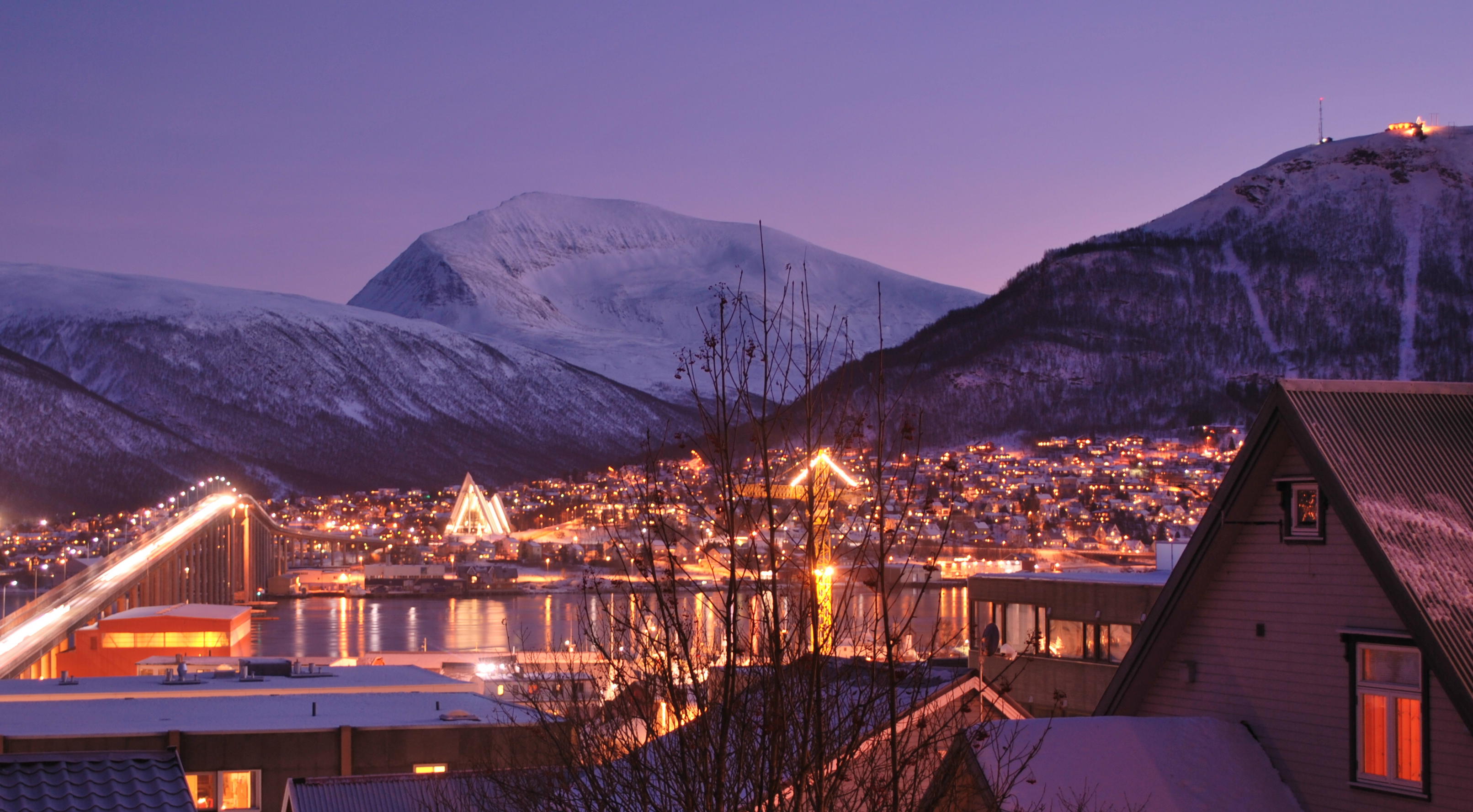
Midnight sun is a period of daylight which lasts for more than 24 hours. It occurs during the summer inside of the Arctic and Antarctic circles. At the edge of the Arctic circle, the sun doesn't set between June 12 and July 1. However, this becomes months further north. During the winter, taiga experiences the opposite phenomenon: polar night. This is the lack of daylight for more than 24 hours, but can be extended to include twilight.
File:Morketidettermiddag.JPG
Early afternoon in Tromsø, Norway
 69°38'56.04"N
 18°57'18.30"E

Friday, January 7, 2011

Hydrologic Cycle

File:Water cycle.png

The hydrologic cycle, also known as the water cycle, is the constant movement of water throughout Earth. Its three steps are precipitation, evaporation, and condensation. In the taiga biome, there is low precipitation (250-750 mm yearly), and even less evaporation.

 66°41'4.48"N
 71°12'50.86"E

Commensalism and Parasitism


The brainworm (Parelaphostrongylus tenuis) is a parasitic nematode which resides in taiga. Its natural host is the white-tailed deer (Odocoileus virginianus). In other words, the brainworm uses the deer as a home and a place to reproduce without adversely affecting it. This is an example of commensalism. Both species live throughout North America, including much of Canada and northern America.

When the brainworm first hatches, it grows in the brain of the white-tailed deer. As a larvae, it then exits the animal through feces. Next, it infects gastropods such as snails and slugs. There it becomes mature. When an ungulate accidentally ingests an affected gastropod, the brainworms travel through the spinal cord to the brain, causing severe illness. Therefore, the brainworm is also a parasite. In taiga, the brainworm most often affects the moose, causing moose sickness.


 45°56'15.94"N
 68° 6'38.46"W

Thursday, January 6, 2011

Mutualism


One example of mutualism in taiga is moss growing on trees. This happens on many trees, especially further north in taiga. The moss benefits because it is given a spacious place to grow, and the tree is given a thick layer of protection.

 59°44'48.54"N
153°54'36.59"W

Soil

File:CladonioPinetum.jpg

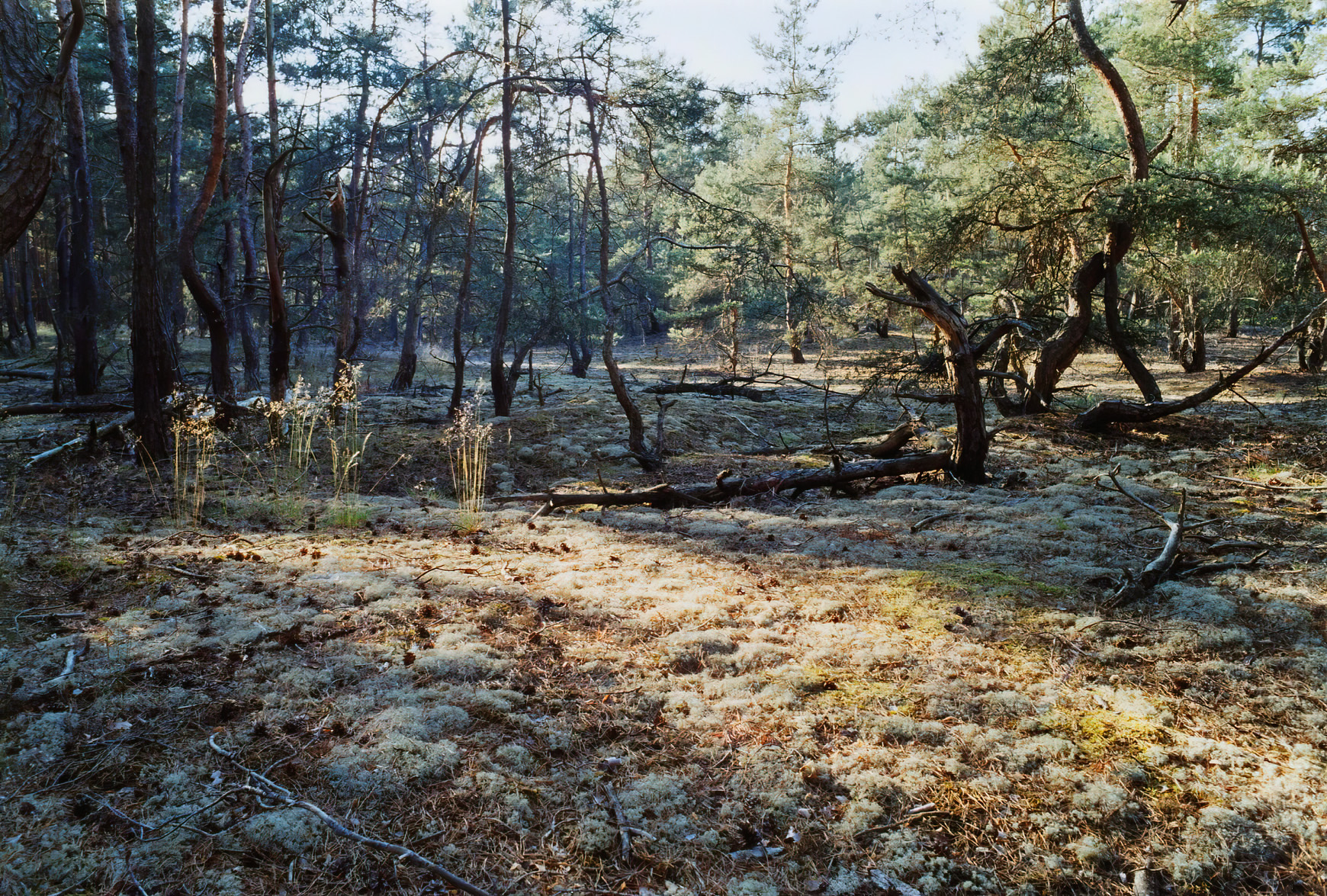
The soil of taiga tends to be thin and acidic. It is also very nutrient poor. The cold hinders the growth of fauna, so the forest floor tends to have only lichens and moss on it. Some parts of taiga have permafrost, which is when soil is frozen year long. Most plants cannot survive in this, but some thrive, including the black spruce (Picea Mariana).

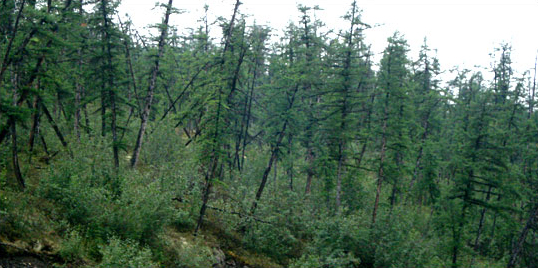
File:20070801 forest.jpgWhen permafrost melts, trees can become misaligned. Because of the thin soil, trees have shallow roots, which can allow them to tilt or even fall. This phenomenon is called "drunken trees". Drunken trees usually occur in taiga; specifically the black spruce. Entire forests can be destroyed by melting, making it a bellwether of climate change.

 49°49'58.01"N
124°28'12.63"W

Friday, December 17, 2010

Golden Eagle

File:Steinadler Aquila chrysaetos closeup1 Richard Bartz.jpg

The golden eagle (Aquila chysaetos) is a predator common to the northern hemisphere. It lives in taiga, but not exclusively. They are highly territorial, and have been known to control areas 60 square miles in area.  About 90 percent of their diet consists of mammals, such as rabbits, ground squirrels and prairie dogs. However, their feeding varies greatly depending on the region.

 49°21'25.32"N
122°49'16.09"W

Tuesday, December 7, 2010

Brown Bear

File:Brown-bear-in-spring.jpg


The brown bear (Ursus arctos) is a large mammal native to Russia, North America, Romania, and Norway. At maturity, these can weigh anywhere between 660 and 1720 pounds. These animals chiefly feed on spawning salmon (Salmonidae), which are highly abundant in much of taiga. However, they sometimes predate larger animals, such as bison, moose elk, deer, and bighorn sheep.

File:Lake Washington Ship Canal Fish Ladder pamphlet - ocean phase Coho.jpg


Brown bears regularly compete with wolves for prey. Sometimes, a bear will scare a wolf away from its kill. However, if the wolf doesn't back down, a battle between the bear and the wolf pack may insue. Some other species against which the brown bear competes are the siberian tiger and black bear.
File:BärenspurP1050395.jpg

55°43'53.53"N
38° 8'42.99"E